Water Garden Pests - Insects, Bugs and Animals
Aphids


Water lily aphids are sap-suckers and form dense colonies on the underside and top of the pads and top of the petioles (stems). Lilies are particularly prone to attack where they are overcrowded and the stems and leaves stick out of the water. Prolonged attack will cause yellowing and curling of leaves and destruction of buds and flowers.
Controls:
- Hose down the leaves and stems and squashing and rubbing off with fingers.
- They can also be drowned by dropping the lily down so leaves are submerged for a day or two.
Caddis Fly


Some larvae make protective cases in which to live, other species are free-living.Caddis larvae burrow into Tropical water lily flower stems causing flowers to die or break off easily. Look for bulges in the flower stems
Control: Gold fish forage for Caddis fly lavae when hungry.
Army Caterpillers
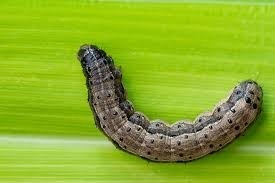
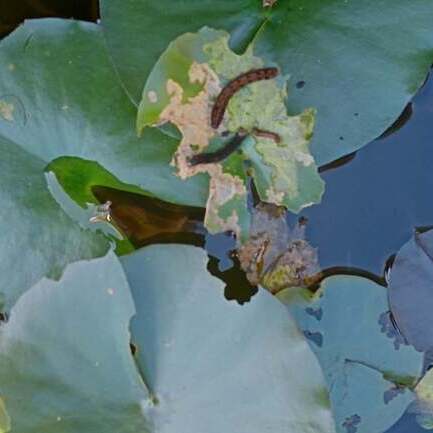
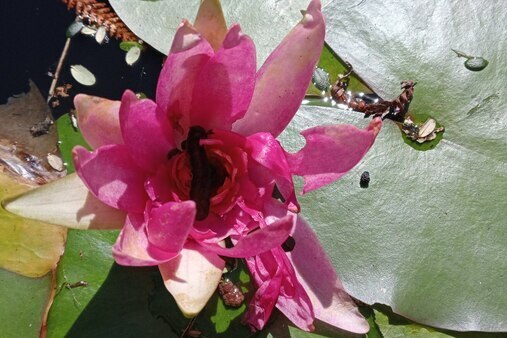
This is an invasive pest on water lilies as they can desimate and chew through water lily flowers and leaves overnight.
Detection. Signs of the presence of armyworms include: chewing/leaf scalloping along the leaf margins. caterpillar excreta or 'frass', which collects on leaves or at the base of the plant – these appear as green or yellow cylindrical pellets 1 mm to 2 mm long.
Control: Pick off or wash off leaves with a hose for goldfish to eat or drown
Aquatic Snails - lymnaea stagnalis

These big transparent worms that appear under the leaves of water lilies are actually eggs of the Aquatic snail. There are many different species of aquatic snail in New Zealand so differentiating each one is not required
These snails are typical small animals that appear spontaneously in ponds.
They are not harmful, but they eat algae, submerged plants and floating plants, dead leaves and carrion.
If they get hungry they can feed on water lily leaves leaving round black unsightly spots.
If you have any additional questions you need answering regarding pests on your aquatic plants, water lilies or Lotus please do not hesitate to contact us and remember to send a photo - it makes identifying the problem alot easier.
Pukeko

The Pukeko is widespread in New Zealand.
These birds can cause damage in ponds and natural swimming ponds when foraging for food. In newly planted ponds and wetland areas they can pull up large areas of new plantings.
Pukeko are primarily vegetarian, but animal foods make up a small proportion of the diet. Most common foods are the stems, shoots, leaves and seeds of grasses, sedges (e.g. Carex and Scirpus), rushes (Juncus), clover and bullrush. They also eat garden vegetables and crop plants. Animal foods consist mostly of insects, spiders and earthworms however there are rare reports of pukeko taking larger prey such as frogs, lizards, fish and nestling birds. The bill is used to cut, rip or dig up plants which are typically held and manipulated in the foot (i.e. ‘parrot style’) as they are eaten.
Deterent: Loud noises, dogs